Charitable trust website development India is becoming increasingly important for charitable organizations that want to build credibility, communicate their mission and reach more supporters online.
Table of Contents
A professional website gives a charitable trust one central platform to showcase its projects, explain its mission, publish reports, attract volunteers and provide convenient donation options.
Today, people often search online before deciding whether to support an organization. They may want to know what the trust does, who it helps, where it operates and how donations are used.
This is why a well-planned website should do more than simply display an organization’s name and contact details.
A modern charitable trust website should combine trust, transparency, usability, performance, accessibility and easy communication.
What Is Charitable Trust Website Development India?
Charitable trust website development India refers to designing and developing websites specifically for charitable trusts and nonprofit organizations operating in India.
Such a website can be created around the organization’s actual objectives and activities.
Depending on the trust’s requirements, the website may include:
- About the trust
- Mission and vision
- Founder and leadership information
- Trust activities
- Social projects
- Impact stories
- Donation facilities
- Volunteer registration
- Events and campaigns
- Photo and video galleries
- Annual reports
- News and updates
- Blog
- Contact forms
- Location information
- Social media integration
The important point is that the website should be designed around the audience and purpose of the trust, rather than simply using a generic template.
Why Charitable Trusts Need a Professional Website
A charitable trust may already have an offline presence, volunteers and community activities, but people increasingly expect organizations to provide information online.
A professional website allows visitors to quickly understand:
- What the trust does
- Which communities it supports
- What programs it runs
- Where its projects are located
- How people can contribute
- How volunteers can participate
- Where to find organizational information
A website also gives the trust control over its digital presence.
Instead of depending entirely on social media platforms, the organization can maintain its own central source of information.
For organizations researching charitable trust website development India, this is one of the most important considerations: the website should become a long-term digital asset rather than just a one-time design project.
9 Powerful Features of Charitable Trust Website Development India
1. Mission-Focused Homepage
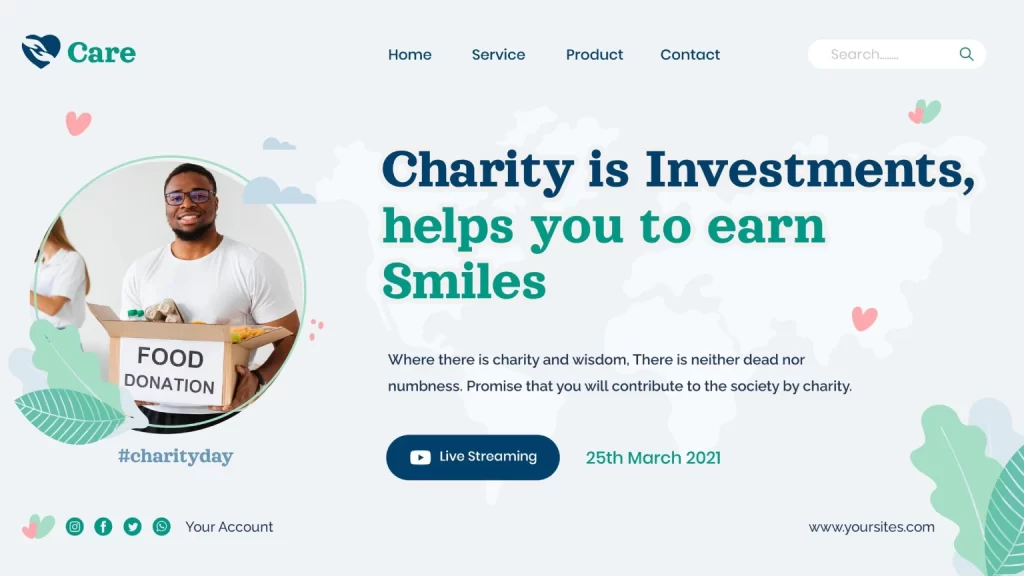
The homepage should immediately explain the organization’s purpose.
Visitors should not have to read several paragraphs before understanding what the trust does.
A strong homepage can include:
- Short mission statement
- Main social causes
- Featured projects
- Impact statistics
- Donation CTA
- Volunteer CTA
- Latest stories
- Upcoming events
- Trust information
For example, the hero section could communicate:
“Supporting Education and Building Better Opportunities for Communities Across India.”
The exact message should reflect the organization’s real mission.
The homepage should also contain clear calls to action such as Donate Now, Become a Volunteer, Explore Our Projects or Contact Us.
2. Detailed About Trust Page
The About page is an important credibility section.
A charitable organization can use this page to explain its background and objectives.
Useful information can include:
- Establishment year
- Founder information
- Mission
- Vision
- Core values
- Areas of work
- Geographic coverage
- Leadership
- Registration details
- Organizational approach
Instead of writing everything as one large block of text, information should be divided into logical sections.
Photographs of the organization, team or activities can also make the page more engaging.
3. Project and Program Pages
One of the strongest features of charitable trust website development India is the ability to create dedicated pages for individual projects.
For example, an education trust might have:
- School Support Program
- Scholarship Initiative
- Digital Education Program
- Rural Learning Project
Each project page can explain:
Objective
What problem is the project trying to address?
Location
Where is the project being conducted?
Beneficiaries
Who is being supported?
Activities
What does the program actually involve?
Impact
What measurable results are available?
Updates
What has happened recently?
This structure makes the organization’s work easier to understand.
4. Online Donation System
For many charitable trusts, donations are an important part of fundraising.
A website can provide a dedicated donation page where visitors can learn about the organization’s fundraising objectives and available payment options.
Depending on the requirements, a donation system can include:
- One-time donations
- Recurring donations
- Campaign-specific donations
- Donor information
- Payment gateway
- Donation confirmation
- Email notifications
- Receipts
- Donation history
The donation page should remain simple.
Visitors should be able to understand what they are supporting, how to contribute and what information is required.
For organizations accepting online payments, security and appropriate compliance requirements should also be considered during development.
5. Volunteer Registration
Volunteers can play an important role in charitable organizations.
Instead of asking interested people to send an email manually, a website can provide an online volunteer registration form.
The form can collect:
- Name
- Phone number
- City
- Skills
- Areas of interest
- Availability
- Preferred volunteering activity
A trust can organize volunteer opportunities around areas such as:
- Education
- Healthcare
- Environment
- Fundraising
- Events
- Community outreach
- Digital support
This creates a more organized process for receiving volunteer enquiries.
6. Transparency and Reports
Transparency can help visitors understand an organization’s activities.
A charitable trust website can include a dedicated Reports and Documents section.
Possible content includes:
- Annual reports
- Impact reports
- Project reports
- Organizational documents
- Financial information where appropriate
- Certificates
- Important announcements
The exact information published should depend on the organization’s legal and operational requirements.
Keeping documents organized also makes it easier for supporters and stakeholders to find important information.
7. Stories, Images and Videos
Social impact is often easier to understand through real stories and visual content.
A charitable trust can publish:
- Beneficiary stories
- Volunteer experiences
- Project photographs
- Event videos
- Community stories
- Campaign updates
- Success stories
For example, instead of only writing:
“We support education.”
The website could publish a detailed story about a specific educational initiative, including its location, activities and measurable outcomes.
However, organizations should handle personal information and photographs responsibly and obtain appropriate permissions where necessary.
8. Mobile-Friendly Experience
A modern website must work well across smartphones, tablets and desktop computers.
Mobile users should be able to:
- Read about the trust
- Browse projects
- Make enquiries
- Register as volunteers
- Access reports
- Donate
- Contact the organization
Buttons should be easy to tap and forms should not require excessive scrolling or complicated interaction.
Mobile performance is especially important for donation and campaign pages.
9. SEO-Friendly Website Structure
Search engine optimization should be considered during development rather than after the website has already been built.
A properly structured website can include:
- Search-friendly URLs
- Optimized page titles
- Meta descriptions
- Proper heading structure
- Image ALT text
- Internal linking
- XML sitemap
- Mobile responsiveness
- Fast-loading pages
- Useful content
- Structured data where appropriate
For example, a charitable trust working in education can create useful pages around its actual initiatives rather than publishing generic articles simply to target keywords.
This can help search engines understand the website’s purpose and content.
Essential Pages for a Charitable Trust Website
A professional website can have a structure such as:
| Page | Main Purpose |
|---|---|
| Home | Introduce the organization |
| About Us | Explain history and mission |
| Our Programs | Present major areas of work |
| Projects | Explain individual initiatives |
| Our Impact | Show measurable results |
| Donate | Provide donation information |
| Volunteer | Collect volunteer applications |
| Stories | Share real experiences |
| Gallery | Display photographs and videos |
| Reports | Publish relevant documents |
| Events | Promote activities and campaigns |
| Blog | Publish useful updates and articles |
| Contact | Provide contact information |
The exact structure can be modified according to the trust’s size and activities.
Website Design for Different Types of Charitable Trusts
Not every charitable trust needs the same website.
Education Charitable Trusts
An education-focused trust can highlight:
- Schools
- Scholarships
- Students
- Learning programs
- Digital education
- Teacher support
- Educational campaigns
Project pages can explain how each initiative works and who benefits.
Healthcare Charitable Trusts
A healthcare trust may focus on:
- Medical camps
- Healthcare facilities
- Patient support
- Health awareness
- Community healthcare
- Medical assistance programs
Images, reports and project updates can help visitors understand the organization’s work.
Child Welfare Trusts
A child-focused organization can create sections around:
- Education
- Nutrition
- Child development
- Community support
- Learning programs
- Welfare initiatives
Content should be written carefully when it involves children or sensitive personal information.
Women Empowerment Trusts
A women’s empowerment organization may highlight:
- Skill development
- Employment programs
- Entrepreneurship
- Training
- Community initiatives
- Awareness campaigns
Success stories can demonstrate the practical outcomes of these programs.
Environmental Trusts
Environmental organizations can showcase:
- Plantation programs
- Conservation
- Waste management
- Environmental education
- Community participation
- Sustainability initiatives
Visual content can be particularly useful for environmental projects.
Donation Page Design for Charitable Trusts
The donation page should answer important questions before asking visitors to contribute.
Visitors should understand:
What is the campaign?
Who will benefit?
What is the objective?
How can I contribute?
What payment options are available?
A campaign page could include:
- Campaign title
- Short description
- Target amount
- Amount raised
- Number of supporters
- Project photographs
- Campaign updates
- Donation button
For example:
Help Support Rural Education
The page could explain the project, its location, objectives and current progress.
This type of focused campaign page can be easier for visitors to understand than a generic donation form.
Building Trust Through Website Content
Good design alone is not enough.
The content should be clear, factual and easy to understand.
A charitable trust can publish:
- Founder message
- Mission statement
- Leadership information
- Project information
- Impact reports
- Annual updates
- News
- Events
- Partner information
Impact statistics should be based on actual organizational data.
For example, instead of making broad claims, the website can state:
“Our education initiative supported 2,500 students during the 2025–26 academic year.”
Specific information gives visitors a clearer understanding of the organization’s activities.
WordPress for Charitable Trust Website Development
WordPress can be used to build both simple and advanced charitable organization websites.
With a properly developed WordPress website, administrators can manage:
- Pages
- Projects
- Blog posts
- Events
- Reports
- Galleries
- Team members
- Campaigns
Custom WordPress development can also be used when an organization needs functionality beyond standard plugins.
For example, a larger trust may require a custom project management system, donor dashboard or volunteer management system.
Custom Features for Larger Charitable Organizations
Larger organizations may require more advanced functionality.
Donor Dashboard
A donor portal could allow users to access their donation history and relevant documents.
Volunteer Dashboard
Registered volunteers could manage their profile and view available activities.
Project Management
Administrators could create and update projects from the website dashboard.
Campaign Management
Different fundraising campaigns can be created and managed independently.
Automated Notifications
The website can send emails for:
- Donation confirmation
- Volunteer registration
- Event registration
- Campaign updates
- Contact enquiries
These features can reduce manual administrative work.
SEO Strategy for a Charitable Trust Website
A website should be optimized around the organization’s actual services, causes and locations.
Potential keyword categories can include:
- Charitable trust website development
- Charitable trust website design
- NGO website development
- Nonprofit website development
- Charity website development
- Donation website development
- Trust website design
Location-based keywords can also be useful when the organization has a strong geographic focus.
For example:
Charitable Trust in Delhi
Education Trust in West Bengal
Healthcare NGO in Mumbai
However, each page should target a meaningful topic rather than repeating the same keyword unnecessarily.
Google’s official search documentation provides guidance on creating search-friendly websites. Google Search Central
Internal Linking for Charitable Trust Websites
Internal links help visitors discover related information.
For example:
Home → About → Programs → Projects → Impact → Donate
A charitable trust can also connect its project pages to related stories and reports.
For businesses developing the technical platform, related services such as WordPress development and custom plugin development can also be linked naturally.
Website Performance and Security
Security should be considered from the beginning of charitable trust website development India.
Important measures include:
- HTTPS/SSL
- Secure administrator accounts
- Regular backups
- Software updates
- Spam protection
- Secure forms
- Payment security
- User permissions
- Malware monitoring
Performance is also important.
Large images should be compressed and optimized before uploading. Unnecessary scripts and plugins should be avoided where possible.
A fast website provides a better experience for visitors using slower mobile connections.
Accessibility for Charitable Trust Websites
A charitable organization should aim to make its website usable by as many people as reasonably possible.
Important accessibility considerations include:
- Readable typography
- Good contrast
- Descriptive image ALT text
- Proper heading structure
- Keyboard-friendly navigation
- Clear form labels
- Accessible buttons
- Responsive design
The W3C Web Accessibility Initiative provides recognized accessibility guidance for websites. Web Accessibility Initiative
How Much Does Charitable Trust Website Development Cost in India?
The cost depends on the scope of the project.
A basic website may contain:
- Home
- About
- Programs
- Gallery
- Contact
An advanced website may require:
- Online donations
- Payment gateway
- Volunteer management
- Event registration
- Project management
- Donor dashboard
- Custom integrations
- Advanced search
- Custom WordPress functionality
Therefore, development cost should be discussed after defining the required features.
A website should be planned according to the organization’s long-term requirements rather than selecting a package only because it has the lowest initial price.
How to Choose a Website Development Company
When evaluating a company for charitable trust website development India, consider the following:
Relevant Experience
Review previous websites and check whether the development team understands nonprofit or organization-focused websites.
Custom Development
Ask whether the company can develop custom features when standard plugins are insufficient.
Mobile Experience
Check whether previous websites work properly on smartphones and tablets.
SEO Knowledge
The development team should understand basic technical SEO requirements.
Security
Ask about backups, updates, access control and payment security.
Content Management
The organization should be able to update projects, news and reports without needing a developer for every small change.
Post-Launch Support
Website maintenance can be useful for updates, backups, security and future improvements.
Common Mistakes to Avoid
No Clear Mission
Visitors should understand the organization’s purpose quickly.
Hidden Donation Button
If donations are important, the donation CTA should be easy to find.
Outdated Content
Old events and outdated project information can reduce confidence.
Poor Mobile Design
A website that works only on desktop can lose mobile visitors.
Too Much Homepage Text
Important information should be organized into easily scannable sections.
Missing Impact Information
Visitors should be able to understand what the trust actually does.
Slow Images
Large photographs can increase page loading times.
Complicated Navigation
Important pages should be accessible from the main navigation.
Connecting the Website With Other Digital Channels
A charitable website can act as the central hub for the organization’s online presence.
For example:
Google Search → Project Page → Donate
Another journey could be:
Social Media → Campaign Page → Donation
Or:
Google Search → Blog Article → Program Page → Volunteer Registration
This makes the website more useful than simply being an online brochure.
Why Professional Development Matters
A professional charitable trust website development India project should consider design, functionality, content structure, SEO, security and future scalability together.
A trust may initially need only a simple website.
Later, it may require:
- Online donations
- Volunteer management
- Campaign pages
- Event registration
- Member accounts
- Project dashboards
- Reports
- Integrations
Building the website with future growth in mind can make it easier to add these capabilities later.
Why Choose NJ Technos?
NJ Technos provides website development solutions for organizations that need customized digital platforms.
For a charitable trust, the website can be planned around its actual activities, audience and required functionality.
Depending on the project, the website can include:
- Custom WordPress development
- Responsive website design
- Donation functionality
- Project management
- Volunteer forms
- SEO-friendly structure
- Performance optimization
- Website maintenance
The focus should be on creating a website that the organization can actually use and maintain after launch.
Frequently Asked Questions
What is charitable trust website development India?
Charitable trust website development India involves designing and developing a website for a charitable trust or nonprofit organization in India, including features such as programs, projects, donations, reports and volunteer registration.
Why does a charitable trust need a website?
A website provides a central platform where supporters can learn about the organization’s mission, projects, impact and ways to participate.
Can a charitable trust accept donations through its website?
Yes, an appropriate payment gateway can be integrated for online donations, subject to applicable banking, legal and compliance requirements.
Can volunteers register through the website?
Yes. A custom volunteer form can collect information such as name, location, skills, interests and availability.
Can WordPress be used for a charitable trust website?
Yes. WordPress can support informational websites as well as more advanced websites with custom functionality.
Can annual reports be published on the website?
Yes. A dedicated reports section can be created for annual reports, project reports and other relevant documents.
Should a charitable trust website be mobile-friendly?
Yes. Responsive design allows visitors to access important information and donation facilities from smartphones and tablets.
Can SEO be included during development?
Yes. SEO-friendly URLs, headings, metadata, internal links, image ALT text, performance and content structure can be considered during development.
Can a charitable trust have a custom donation system?
Yes. Depending on the requirements, a website can include campaign-based donations, payment gateway integration, donor records and automated confirmations.
Final Thoughts
A professional website can give a charitable trust a stronger and more organized digital presence.
The purpose of charitable trust website development India should not be limited to creating an attractive homepage. The website should clearly communicate the organization’s mission, showcase real projects, provide useful information and make it easy for supporters to participate.
Features such as online donations, volunteer registration, project pages, impact reporting, mobile optimization, SEO, security and content management can make the website significantly more useful.
Most importantly, the website should reflect the actual work of the organization.
When design, content and functionality are planned together, a charitable trust can create a digital platform that supports communication, fundraising, volunteer engagement and long-term growth.